Building Confidence in Low-Dose X-Ray Imaging: Technology, Culture, and Trust
Patients today are more aware of radiation than ever, and they often arrive with one quiet question: is this safe? For clinics and practices, the answer is not just a number on a dose report — it is a combination of better technology, a genuine safety culture, and the ability to explain both clearly. Confidence in low-dose imaging is built where those three things meet. Here is how modern portable and digital X-ray systems make it achievable.
Start with the principle: ALARA
Every conversation about radiation dose begins with one idea. ALARA — “As Low As Reasonably Achievable” — is the foundational principle of radiation protection, stating that whenever ionizing radiation is used, exposure should be kept as low as reasonably achievable while still maintaining image quality sufficient for diagnosis (Radiopaedia). The U.S. Centers for Disease Control and Prevention frames it just as plainly: ALARA means avoiding exposure that does not have a direct benefit, using the three practical levers of time, distance, and shielding (CDC).
Critically, ALARA is not about minimizing dose at any cost — it is about optimization. As one review puts it, the principle “delicately balances diagnostic efficiency with minimal radiation exposure,” because in digital radiography the lowest-noise images are obtained at higher doses, so the goal is the right dose, not merely the lowest (Semantic Scholar review on radiological protection). That nuance is what lets clinicians be confident rather than fearful.
Technology: modern detectors do more with less
The single biggest driver of low-dose capability is the detector. Modern digital radiography (DR) panels convert X-ray photons into usable signal far more efficiently than the computed radiography (CR) and film systems they replaced, and that efficiency is measured as Detective Quantum Efficiency (DQE). The higher the DQE, the lower the dose required for a diagnostic-quality image (IDEXX white paper on DR dose optimization).
The numbers are substantial. Detectors with DQE scores above 75% at 60 kVp can enable 30–50% lower patient doses while maintaining diagnostic clarity, according to one manufacturer’s technical summary, and a 2023 multicenter trial reported a 62% lower effective dose in pediatric chest exams using selenium-based detectors compared to CR (Healicom Medical). An independent equipment vendor summarizing peer-reviewed data reports that modern DR panels reach 67–75% DQE versus roughly 30% for CR, enabling 43–67% dose reduction while improving image quality (Spectrum Medical X-Ray). Fujifilm’s Irradiated Side Sampling (ISS) detector design is engineered to cut dose 10–20% versus conventional DR detectors and 30–75% versus CR (Fujifilm white paper).
The research base goes back years: studies have repeatedly shown that dose reduction tracks with DQE, and that flat-panel detectors allow diagnostically adequate images at substantially lower patient doses than film or CR (PubMed: appropriate dosing in digital radiography; ScienceDirect: DR detectors technical overview).
Workflow: instant review prevents the dose you never needed
The most under-appreciated dose-reduction tool is the one that prevents retakes. Because DR systems display the image in real time, technologists can confirm positioning and exposure on the spot — and the dose that matters most is the repeat exposure you avoid entirely. Hospitals that switched to direct digital capture saw repeat-scan rates drop by roughly a third to nearly half compared to older CR systems (Healicom Medical).
But technology alone is not enough. Realizing the dose savings requires disciplined protocols — immediate AEC recalibration and exposure-index monitoring after installation — or facilities risk “dose creep” and lose much of the benefit (Spectrum Medical X-Ray). Using the same protocol every time, with collimation and correct technique, is fundamental to quality low-dose imaging (Fujifilm).
Culture: ALARA is a team commitment, not a setting
The best equipment in the world will not lower dose if the culture around it does not support it. An effective ALARA program “requires a commitment from all relevant staff” — veterinarians, technologists, and anyone working near the equipment — and management should make a formal policy commitment backed by adequate resources (IDEXX ALARA download; Minnesota Department of Health ALARA guidance). Leading academic centers institutionalize this: UCSF Radiology states it follows ALARA by always using “the lowest radiation dose consistent with getting imaging results that are of appropriate diagnostic quality,” and treats ongoing education of technologists and physicians as key to maintaining safety and accreditation (UCSF Department of Radiology).
National campaigns exist precisely to build this culture. Image Gently focuses on appropriate dose in pediatric imaging, while Image Wisely — created by the ACR, RSNA, AAPM, and ASRT — works to lower dose in medically necessary studies and eliminate unnecessary ones (Image Wisely; Image Gently). One multihospital study found that combining CT protocol optimization with an educational campaign aimed at referring providers reduced both CT utilization and dose per study (PubMed: Image Gently / Image Wisely campaign evaluation).
Justification: the dose you don’t take counts most
Before optimization comes justification — the principle that an exam should only be performed when it will genuinely benefit the patient. Reducing dose starts with two questions: is this study justified, and if so, how do we minimize the exposure (PMC: Reduced Radiation Dose in Diagnostic Radiology). The benefits of a justified X-ray, when clinically indicated, are widely understood to outweigh the small risks attributed to low-dose diagnostic imaging (PMC: Principles of radiological protection and ALARA). Framing imaging this way — justified, optimized, beneficial — is what turns a patient’s anxiety into informed confidence.
Trust: communicate dose honestly, educate over fear
Confidence is ultimately a conversation. Justification, as one review notes, “includes a legitimate explanation to patients” and should always be considered alongside the ethical dimension of imaging (PMC: Reduced Radiation Dose in Diagnostic Radiology). The most reassuring thing a practice can do is be transparent: explain why the exam is needed, that the dose is being deliberately minimized, and that everyday life already includes natural background radiation (PMC). Image Gently’s recent move toward family-friendly educational materials reflects this shift from alarming patients to informing them (American College of Radiology).
What to look for in a confidence-building system
- A high-DQE detector: CsI or amorphous-selenium flat panels deliver diagnostic quality at lower dose than CR — ask vendors for the DQE figures.
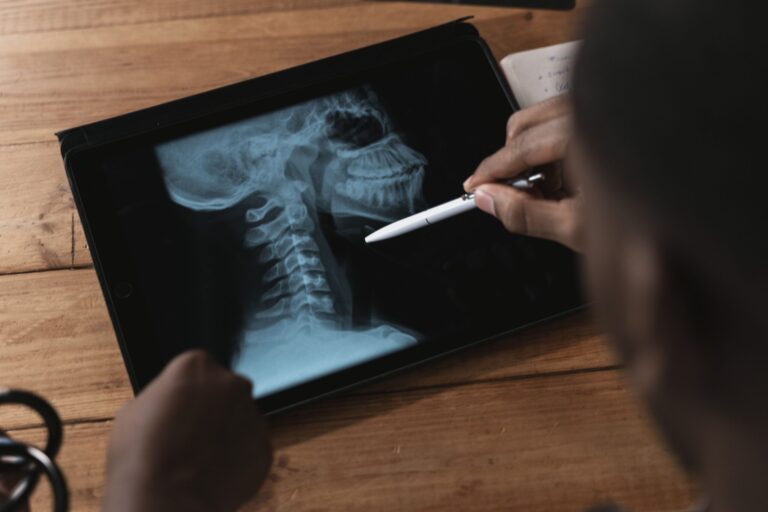
- Real-time image review: instant on-tablet or on-monitor preview to confirm positioning and avoid repeat exposures.
- Exposure-index feedback: built-in EI/DI reporting so technologists can monitor and prevent dose creep over time.
- Consistent protocols and AEC: anatomy-specific presets and proper automatic exposure control, recalibrated after install.
- Collimation and shielding aids: tools that make ALARA practice the default, not an afterthought.
- Training and onboarding support: a vendor who helps your team optimize protocols, not just plug in hardware.
The bottom line
Low-dose imaging confidence is not a single feature you buy — it is a system you build. The technology (high-DQE digital detectors) makes low dose achievable; the workflow (instant review, consistent protocols, exposure monitoring) makes it repeatable; the culture (ALARA as a shared commitment, backed by justification) makes it real; and honest patient communication turns all of it into trust. Practices that align those layers do not just lower dose — they earn the quiet confidence of every patient who walked in wondering whether it was safe.
Want help choosing a low-dose-capable system? We match detector technology, dose-optimization features, and workflow tools to your practice — and help you build the protocols and training that make ALARA routine. Request a consultation.
This article is general educational information and is not medical or regulatory advice. Imaging decisions should always be made by qualified clinical and radiation-safety professionals.
Sources & References
- Guidelines for ALARA – As Low As Reasonably Achievable — U.S. Centers for Disease Control and Prevention
- As Low As Reasonably Achievable (ALARA) — Radiopaedia
- Image Wisely (ACR, RSNA, AAPM, ASRT)
- Image Gently — Alliance for Radiation Safety in Pediatric Imaging
- Image Gently Launches Family-Friendly Campaign — American College of Radiology (2025)
- Evaluating an Image Gently and Image Wisely Campaign in a Multihospital Health Care System — PubMed
- Radiation Safety & Risk Reduction — UCSF Department of Radiology
- ALARA Guidance Document — Minnesota Department of Health
- ALARA Principle for Minimizing Radiation Exposure — IDEXX
- Radiation Dose Optimization with the ImageVue DR50 Plus (DQE white paper) — IDEXX
- How Digital Radiography Reduces Radiation Dose — Healicom Medical
- Image Quality Improvement With New DR Panels — Spectrum Medical X-Ray
- Innovations in Digital Radiography and Dose Reduction — Fujifilm
- Study of Appropriate Dosing Considering Image Quality and Patient Dose in Digital Radiography — PubMed
- Digital Radiography Detectors – A Technical Overview, Part 2 — ScienceDirect
- Reduced Radiation Dose in Diagnostic Radiology — PMC
- Principles of Radiological Protection and Application of ALARA — PMC (2025)