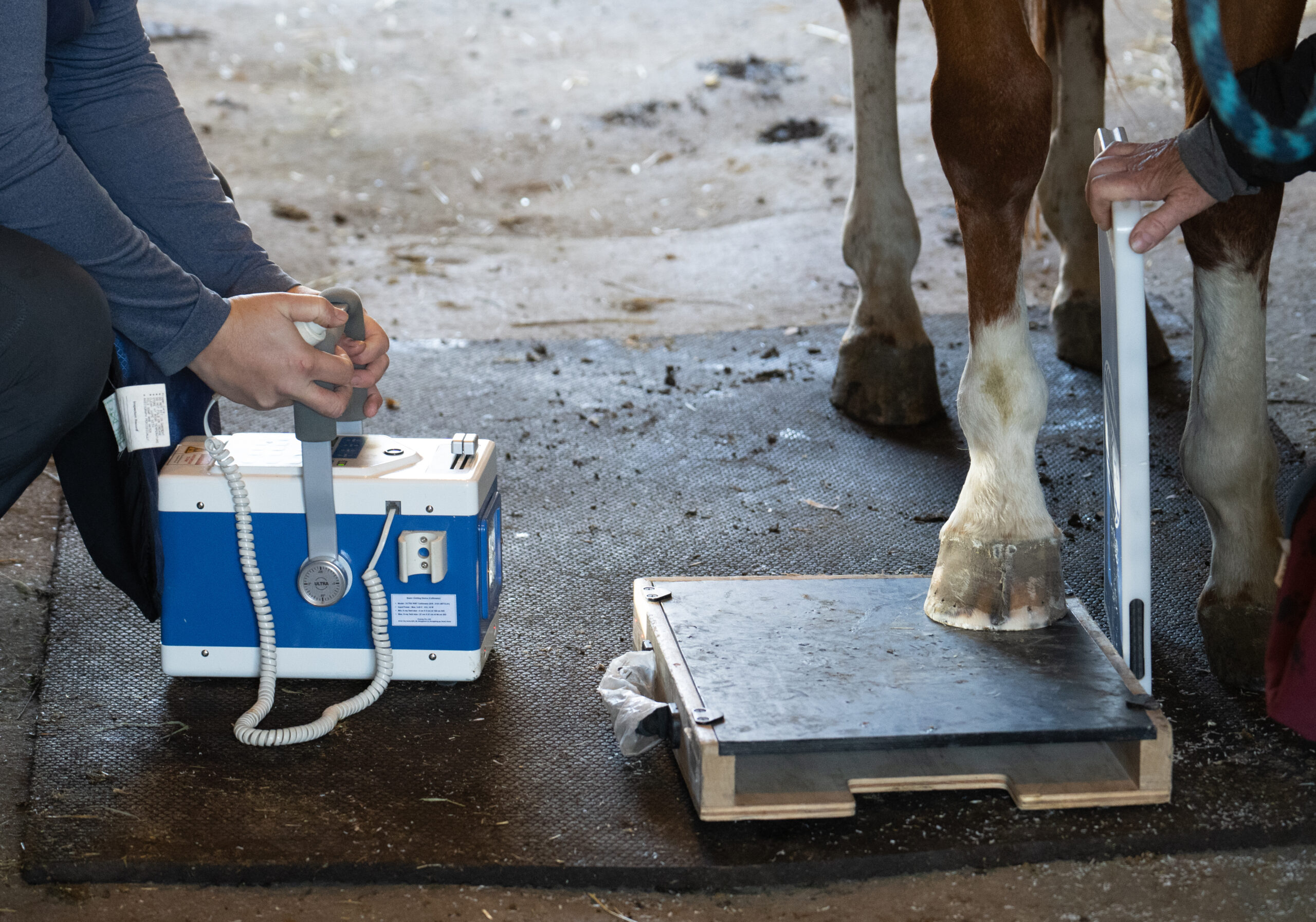
Battery-Powered Handheld X-Ray for Equine Imaging: Speed, Quality, and Confidence in Pre-Purchase Exams
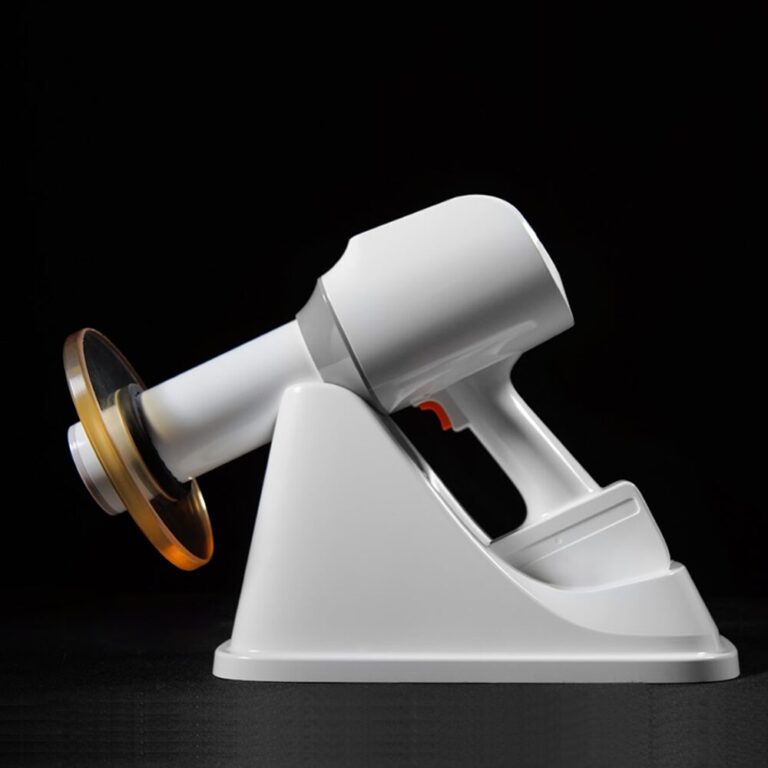
Battery-powered handheld X-ray systems paired with wireless digital detectors have quietly become the field standard for equine imaging. For the pre-purchase exam (PPE) — where a buyer, a seller, and often an insurer are all waiting on the same set of films — speed, image quality, and defensible documentation matter as much as the diagnosis itself. Here is the practical case for going portable.
Why the pre-purchase exam is a unique imaging challenge
A PPE is rarely a quiet clinical encounter. It usually happens at a barn or a sales facility, on someone else’s schedule, with a buyer who needs an answer before money changes hands. There is no fixed radiography suite, the patient weighs half a ton and would prefer to be elsewhere, and the radiographs become part of a financial transaction the moment they are captured.
That changes what “good imaging” means. The films must be diagnostic-grade, captured efficiently before sedation wears off, and documented cleanly enough to support a purchase decision — or a later dispute. As Cornell University’s College of Veterinary Medicine notes, a full sport-horse set commonly runs 40 to 42 views, so workflow efficiency is not a luxury — it is the difference between a one-visit exam and a logistical headache.
Benefit 1: Untethered mobility goes where the horse is
The single defining advantage of a battery-powered handheld generator is that it needs no wall outlet. Barn aisles, paddocks, sales grounds, and quarantine stalls rarely offer convenient, grounded power — and a unit that runs a full clinic day on its own battery removes that constraint entirely. The equipment travels to the horse rather than forcing the horse (and the buyer) to travel to a clinic.
Modern wireless DR workflows reinforce this: the generator and the flat-panel detector communicate with a tablet over Wi-Fi, so the entire imaging chain is cordless. As OR Technology describes for its portable equine systems, wireless operation lets the veterinarian review each exposure on the tablet within seconds and forward images to a specialist via the cloud before leaving the property (OR Technology).
Benefit 2: Instant image review means fewer repeats and fewer return trips
With film or CR, a poorly positioned navicular skyline might not reveal itself until the plates were processed — often after the horse was already back in its stall. Wireless DR shows the image on the tablet in seconds, so the veterinarian can confirm positioning, exposure, and diagnostic quality on the spot and re-shoot immediately if needed.
That immediate feedback loop matters most for the technically demanding PPE views. Training resources consistently emphasize that consistent, standard projections with even weight-bearing reduce repeat exposures — and the fastest way to guarantee a usable view is to confirm it before moving on (Dawei Veterinary, summarizing IMV Imaging fetlock technique).
Benefit 3: Diagnostic image quality that holds up to scrutiny
Portable no longer means compromised. Radiography remains the most accessible and widely used imaging modality in equine practice, and diagnostic-quality limb and head studies are routinely obtainable with portable generators (ScienceDirect, Veterinary Clinics: Equine Practice). The critical limb structures a PPE turns on — the margins of the navicular bone, joint spaces in the fetlock and hock, the trochlear ridges of the stifle — are exactly what a well-specified handheld unit and a modern detector resolve cleanly.
Image quality in digital systems is driven heavily by detector efficiency and correct exposure technique, which is why matching the generator’s output to a high-DQE detector and a consistent exposure protocol pays off across a 40-view set (PubMed: factors affecting exposure level in equine digital radiography).
Benefit 4: Professional documentation builds client trust
A PPE is a transaction document as much as a clinical one. DICOM images with consistent labeling, dedicated PPE reporting templates, and the ability to share studies with the buyer or a referral specialist turn raw radiographs into a defensible record. Several equine DR platforms now include report modules built specifically for purchase examinations, automatically assembling the standard view set into a structured report (Leonardo DR equine system documentation).
Buyers remember the experience. A veterinarian who can pull up a clean, labeled lateral on a tablet, explain the finding, and email the buyer a DICOM set before leaving the barn projects exactly the professionalism and transparency that earns repeat referrals.
Benefit 5: Confidence at the point of decision
The hardest moment in a PPE is the conversation about a borderline finding. Reviewing the image immediately — and capturing an additional oblique or tangential view on the spot when something looks questionable — lets the veterinarian make that call on facts rather than memory. As the Chicago Equine Medical Center view list and Virginia Equine Imaging both illustrate, the standard set is really a decision tree: questionable areas get followed up with additional views. Portable, instant-review imaging makes that follow-up a thirty-second decision instead of a second appointment.
Where portable handheld equine X-ray fits — and where it doesn’t
The strongest fit is the distal-limb and standing work that defines the PPE: front feet and navicular, all four fetlocks, hocks, stifles, and selected carpus, neck, and back views when the clinical exam warrants them. It is not a substitute for advanced modalities — ultrasound, CT, MRI, or scintigraphy — which remain the right tools for soft-tissue and cartilage assessment beyond the reach of plain radiography (Dressage Today). And as imaging specialists stress, there is no universal radiographic protocol: the view set should be tailored to the individual horse, its intended use, and the buyer’s risk tolerance (ScienceDirect: Radiography and the Equine Prepurchase Exam).
What to look for in a battery-powered equine unit
- Generator output matched to the work: demanding standing views (neck, back, proximal limb) need adequate kV/mA reserve; a higher-power high-frequency unit produces cleaner penetration on heavy structures.
- True battery operation: a charge that lasts a full sales-barn day, with spare batteries and a field charger, keeps the exam moving.
- Modern wireless flat-panel detector: a high-DQE CsI detector in a 14 x 17 and/or 10 x 12 format covers limb and standing work; flexible/rugged substrates survive barn handling.
- Fast, reliable tablet-to-detector link: instant on-tablet review with a usable working distance between operator and detector.
- PPE-ready software: DICOM output, purchase-exam report templates, and easy cloud/teleradiology sharing for second opinions.
- Light, balanced ergonomics: a unit a single veterinarian can position safely around a moving horse, all day.
- Service and support: field equipment takes abuse — choose a vendor with a clear service plan and regional parts availability.
The bottom line
For the equine pre-purchase exam, battery-powered handheld X-ray with a wireless DR detector aligns the three things every PPE is judged on: it is fast enough to capture a 40-view set in one sedation window, sharp enough to resolve the structures the decision turns on, and documented well enough to stand behind. The result is not just better images — it is more confident decisions, smoother transactions, and the kind of professionalism that keeps buyers and sellers coming back.
Considering a portable equine X-ray system? We help equine and mixed practices match generator output, detector format, and PPE software to the actual work — honest guidance, no pressure. Request a consultation.
Sources & References
- Equine Pre-Purchase Exams: What to Expect — Cornell University College of Veterinary Medicine (2023)
- Minimum Recommended Radiographic Views for Pre-Purchase Exam — Chicago Equine Medical Center
- Pre-Purchase Exams (full view set) — Virginia Equine Imaging
- Equine Radiography: Portable X-Ray Generators — Veterinary Clinics of North America: Equine Practice
- Radiography and the Equine Prepurchase Exam — Veterinary Clinics: Equine Practice
- Factors Affecting Exposure Level in Equine Digital Radiography — PubMed (2023)
- Best DR Systems for Equine Limb Imaging (IMV Imaging fetlock technique) — Dawei Veterinary
- The Role of Radiographs in the Equine Prepurchase Exam — Dressage Today